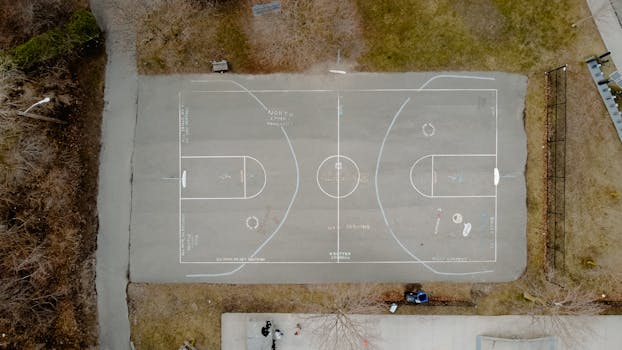
The Evolution of Basketball: Past, Present, and Future
Basketball is more than just a game. Since its invention in 1891, it has grown into a global phenomenon, influencing culture, shaping communities, and entertaining billions. From its humble beginnings in a Massachusetts gym to the high-tech arenas and international leagues of today, basketball’s journey is a fascinating tale of innovation, athleticism, and social impact. This article delves into the evolution of basketball, exploring its origins, major milestones, the current state of the sport, and what the future might hold.
The Birth of Basketball: From Peach Baskets to Popularity
Basketball was invented by Dr. James Naismith in December 1891 in Springfield, Massachusetts. Tasked with creating an indoor activity to keep students active during harsh New England winters, Naismith hung two peach baskets at opposite ends of a gym and used a soccer ball. The first game had nine players per team and ended with a score of 1-0.
In its early years, the game differed significantly from what we see today: - The original 13 rules were handwritten by Naismith. - There was no dribbling; players could only pass the ball. - Baskets were literal peach baskets, requiring someone to climb a ladder to retrieve the ball after each score. As the sport gained popularity, key changes were introduced: - In 1893, the first iron hoops and backboards replaced peach baskets. - By 1906, the open-ended nets we know today became standard, allowing the ball to fall through freely. - The number of players per team standardized to five in 1897.By the early 20th century, basketball had spread beyond the YMCA and was played in colleges, high schools, and eventually professional leagues.
.png)
The Rise of Professional and International Basketball
The evolution of basketball accelerated dramatically in the 20th century with the founding of professional leagues and the sport’s global expansion.
- The first professional league, the National Basketball League (NBL), was formed in 1898 but lasted only six years. - The Basketball Association of America (BAA) and the National Basketball League merged in 1949 to form the National Basketball Association (NBA), which remains the premier basketball league globally. Key milestones in professional basketball include: - The introduction of the 24-second shot clock in 1954, speeding up the pace of the game. - The NBA’s racial integration in 1950, with Earl Lloyd becoming the first African American player. - The American Basketball Association (ABA) introduced the three-point line in 1967, a game-changing rule later adopted by the NBA in 1979. Basketball’s international growth is equally impressive: - The sport became an Olympic event in 1936 in Berlin. - FIBA, the sport’s international governing body, now counts over 210 member nations. - The NBA began hosting games and training camps worldwide in the 1990s, boosting its global fan base.Today, nearly 450 million people play basketball globally, making it one of the most popular team sports in the world.
Modern Basketball: Technology, Tactics, and Star Power
Modern basketball is a blend of athleticism, strategy, and technology. The NBA, WNBA, and international leagues showcase the sport at its highest level, with innovations that continue to shape the game.
Technology’s impact is evident in several areas: - Data analytics: Teams use advanced statistics to inform decisions, from player recruitment to in-game strategy. - Wearable tech: Players use sensors and smart clothing to track performance and prevent injuries. - Broadcast technology: High-definition cameras, instant replays, and augmented reality enhance the fan experience. Tactically, basketball has evolved into a faster, more perimeter-oriented game: - The average NBA team attempts nearly 35 three-pointers per game, compared to just 2-3 per game in the 1980s. - Players are more versatile; positionless basketball is now common, with athletes like LeBron James and Giannis Antetokounmpo excelling in multiple roles. - Defensive schemes use switching and zone defenses more frequently to counteract modern offenses.Star power drives the sport’s popularity. Icons like Michael Jordan, Kobe Bryant, LeBron James, and Steph Curry have become global celebrities, leading to lucrative endorsements and massive social media followings. The NBA reported over 2.1 billion social media interactions during the 2022-23 season alone.
Comparing Eras: How the Game Has Changed
It’s fascinating to see how basketball’s key elements have changed over the decades. The following table highlights some notable differences between the early days, the late 20th century, and the modern era:
| Aspect | Early Basketball (1890s-1940s) | Late 20th Century (1970s-1990s) | Modern Era (2000s-Present) |
|---|---|---|---|
| Number of Teams in NBA | 8 (1949) | 27 (1990) | 30 (2024) |
| Three-Point Line | None | Introduced in 1979 | Integral to gameplay |
| Average Points per Game (NBA) | 68 (1950-51) | 105 (1984-85) | 114 (2022-23) |
| Global Viewership | Primarily U.S. | Expanding (TV deals in 200+ countries) | NBA Finals aired in 215 countries |
| Women's Professional Leagues | None | WNBA founded in 1996 | WNBA, EuroLeague Women, growing global leagues |
Social Impact and Basketball Culture
Basketball’s influence extends far beyond the court. It has become a powerful social force, driving cultural trends, supporting community development, and championing social causes.
Key facts and examples: - Sneakers: Basketball footwear, such as the Air Jordan line, has created a multi-billion-dollar sneaker industry. In 2022, the global basketball shoe market was valued at $4.5 billion. - Music and fashion: Hip-hop artists often reference basketball, and players like Allen Iverson and Russell Westbrook have influenced streetwear and high fashion. - Community programs: NBA Cares and other initiatives have invested over $370 million in community outreach since 2005, building basketball courts and supporting youth programs worldwide. - Social justice: NBA and WNBA players have used their platforms to speak out on issues such as racial equality, voting rights, and mental health awareness.Basketball’s accessibility—requiring just a ball and a hoop—makes it a unifying force in urban and rural communities alike.
The Future of Basketball: Trends and Predictions
What does the future hold for basketball? While the game’s core appeal will likely endure, several trends are set to shape its next evolution:
- Global growth: The NBA is investing heavily in Africa and Asia. The Basketball Africa League launched in 2021, and China remains the league’s largest international market, with over 300 million players. - Women’s basketball: The WNBA’s popularity is surging, with a 21% increase in viewership in 2023. Investment in women’s leagues and pay equity discussions are gaining momentum. - Esports and virtual basketball: NBA 2K League and other digital platforms are introducing basketball to younger, tech-savvy audiences. - Rule changes: Discussions continue about shortening the NBA season, altering overtime rules, and further tweaking the three-point line to balance offense and defense. - Enhanced fan experience: Augmented reality, virtual reality, and interactive viewing options will likely make watching games more immersive and personalized.Innovations in training, analytics, and athlete health will push the boundaries of performance, while the sport’s global reach will ensure its enduring popularity.
Conclusion: A Game That Keeps Evolving
From peach baskets to packed stadiums and from local gyms to Olympic glory, basketball’s evolution is a testament to its universal appeal and adaptability. With every era, the game has reinvented itself—embracing new technologies, breaking barriers, and inspiring generations. As basketball steps into the future, it will continue to reflect and shape the world around it, remaining a source of excitement, unity, and endless possibility.