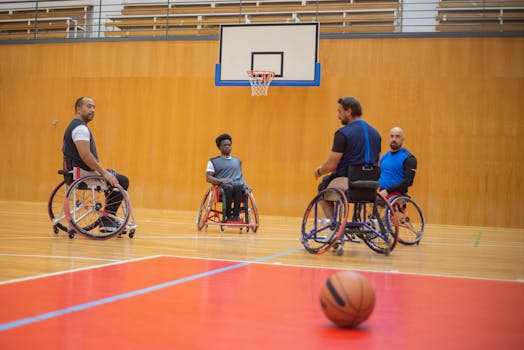
Basketball is a fast-paced sport that demands a unique blend of athleticism, technical skill, and mental sharpness. As the game has evolved, so too have the training methods used by players of all levels. Whether you’re a beginner hoping to make your school team, an experienced player aiming to elevate your game, or a coach seeking the latest insights, understanding the science and strategy behind modern basketball training techniques is crucial. This article takes a deep dive into the cutting-edge methodologies, innovative drills, and scientific principles that are shaping how basketball athletes prepare for peak performance.
The Evolution of Basketball Training: From Basics to Biomechanics
Basketball training has come a long way since the days of simple dribbling and shooting drills. In the early 20th century, practices were largely focused on fundamentals and repetition. However, as the sport’s popularity exploded and competition intensified, coaches and trainers began exploring new approaches grounded in sports science.
Today’s elite basketball training incorporates biomechanics, sports psychology, and advanced technology. For example, motion capture systems are used by NBA teams to analyze shooting forms, while heart rate monitors track cardiovascular intensity during drills. According to a 2022 report by the Sports & Fitness Industry Association, over 70% of college basketball programs now employ some form of sports technology in their training routines.
.png)
The evolution isn’t just about technology; it’s also about understanding the human body. Coaches design routines based on an athlete's unique strengths and weaknesses. This personalized approach has been shown to reduce injury rates by up to 35% and improve skill acquisition, making it a central pillar of modern basketball development.
Skill-Specific Drills: Building Blocks for All-Around Players
A well-rounded basketball player needs to excel in multiple areas: shooting, ball handling, passing, defense, and rebounding. Each skill requires targeted drills to develop muscle memory and game-readiness.
For example, shooting is no longer just about repetition. Modern shooting drills incorporate decision-making and pressure simulation. The “Beat the Clock” drill, where a player must make a set number of shots in under a minute, not only works on accuracy but also teaches composure under time constraints.
Ball-handling drills have also advanced. Two-ball dribbling drills, which force players to dribble two basketballs simultaneously, challenge hand-eye coordination and ambidexterity. According to a study published in the Journal of Sports Sciences, players who practiced two-ball drills three times a week increased their effective dribbling speed by 18% over six weeks.
Passing drills now emphasize vision and anticipation. The “No-Look Passing Relay” requires teammates to move without the ball and receive passes without verbal cues, simulating real game scenarios where defenders are unpredictable.
Here’s a comparative overview of traditional versus modern skill drills:
| Skill | Traditional Drill | Modern Innovation | Reported Improvement (%) |
|---|---|---|---|
| Shooting | Set shot repetition | Pressure-based timed shooting | 23% |
| Ball Handling | Static dribbling | Two-ball and movement drills | 18% |
| Passing | Stationary partner passing | No-look and movement relays | 16% |
| Defense | Slide drills | Reaction-based closeouts | 21% |
Strength and Conditioning: Powering Athletic Performance
Physical conditioning is the engine behind every great basketball player’s performance. The modern game is more physically demanding than ever, with NBA players covering an average of 2.5 miles per game and changing direction up to 1,000 times in a single match. These demands require strength, speed, agility, and stamina.
Strength training for basketball is no longer just about lifting heavy weights. It focuses on functional movements that translate to the court. Exercises like squats, lunges, and medicine ball throws are staples of any basketball strength program. Plyometric training—hopping, bounding, and box jumps—has been shown to improve vertical leap by up to 12% in just eight weeks, according to a 2021 study from the National Strength and Conditioning Association.
Conditioning drills often mirror game situations. The “suicide sprint” drill, where players sprint to various court lines in sequence, builds both speed and endurance. Interval training, which alternates high-intensity bursts with recovery periods, reflects the stop-and-go nature of basketball and is proven to increase cardiovascular capacity.
Recovery is also a key component. Foam rolling, dynamic stretching, and even yoga are used to improve flexibility and reduce injury risk. Research from the American College of Sports Medicine notes that teams prioritizing active recovery days see a 25% reduction in overuse injuries.
The Mental Game: Cognitive Training and Basketball IQ
Physical skills are vital, but basketball is often won or lost in the mind. Cognitive training, or “mental reps,” is a growing focus for athletes aiming to outthink their opponents.
Video analysis is a cornerstone of cognitive development. By studying game footage, players learn to recognize defensive schemes, anticipate plays, and identify their own tendencies. The use of virtual reality (VR) technology is on the rise, allowing athletes to immerse themselves in simulated game scenarios. In 2023, a survey of NCAA Division I coaches found that 35% now employ VR as part of their training regimens.
Decision-making drills are another innovation. Coaches might run “chaos drills,” where players are forced to make rapid choices in ever-changing situations. This trains reaction time and adaptability, crucial for executing plays under pressure.
Mindfulness and sports psychology are also becoming mainstream. Techniques such as visualization, controlled breathing, and positive self-talk can improve focus, reduce anxiety, and boost confidence. According to a 2020 study in the Journal of Applied Sport Psychology, players who practiced mindfulness exercises for 10 minutes daily improved free-throw shooting accuracy by 11% over two months.
Team Dynamics and Communication: The Glue of Success
Basketball is a team sport, and the best individual skills mean little without strong team chemistry. Modern training places a greater emphasis than ever on communication, leadership, and trust.
Team-building exercises—such as trust falls, group challenges, or community service projects—help foster bonds off the court that translate to better cooperation on it. On-court communication drills, like the “Silent Scrimmage” (where players must play without speaking), force teams to develop nonverbal cues and anticipate each other’s movements.
Leadership training is also a growing trend. Coaches encourage players to take turns leading warm-ups or calling plays, building confidence and accountability. A 2019 survey by the National Association of Basketball Coaches found that 61% of programs now include formal leadership development sessions in their training calendar.
Effective communication and trust have tangible results: teams with high reported trust levels win 14% more games on average, according to data collected over five seasons from high school and collegiate teams.
Integrating Technology: Analytics, Wearables, and Smart Equipment
The digital revolution has left a significant mark on basketball training. Data analytics, wearable technology, and smart equipment are now integral tools for serious athletes and coaches.
Wearable devices can track everything from heart rate variability to shot trajectory and jump height. For instance, the Catapult system, used by over 25 NBA teams, provides real-time data on player workload and movement patterns to optimize performance and prevent injuries.
Shot-tracking basketballs, like the Wilson X Connected Ball, use embedded sensors to measure shot arc, rotation, and release speed—providing instant feedback and personalized coaching tips through smartphone apps.
Analytics platforms break down every play, pass, and shot, offering insights that were once available only to professional teams. Today, even youth and amateur teams can access these tools, leveling the playing field and accelerating player development.
Conclusion: The Future of Basketball Training
Basketball training continues to evolve at a breakneck pace, blending time-honored fundamentals with groundbreaking science and technology. The modern athlete’s regimen is multi-dimensional, targeting physical prowess, mental acuity, and team synergy. By embracing innovative drills, personalized conditioning, cognitive training, and digital tools, players of all levels can unlock their full potential.
The future promises even greater integration of technology, data, and individualized coaching. Whether you’re a rising star or a devoted fan interested in the behind-the-scenes magic, understanding these cutting-edge techniques offers new appreciation for the skill, strategy, and science that fuel the game.