Dribbling is more than just an essential basketball skill—it’s a dynamic, creative tool that sets apart good players from great ones. Whether you’re a beginner learning to control the ball or an advanced player refining your handles, developing proper dribbling technique can dramatically improve your confidence, court vision, and effectiveness during games. With the right approach, anyone can significantly enhance their dribbling, regardless of starting skill level. This guide explores actionable tips, proven exercises, and the science behind what makes great dribbling, ensuring players of all levels can progress efficiently and safely.
The Science of Dribbling: Why Technique Matters
Great dribbling is not just about flair; it’s rooted in biomechanics and cognitive skills. Studies show that players who master dribbling increase their in-game efficiency by up to 30%. Proper technique improves coordination, reaction time, and stamina, while reducing turnovers and injury risk. According to a 2022 report by the International Journal of Sports Science & Coaching, players with advanced ball-handling skills record 40% fewer lost possessions compared to those with only basic dribbling ability.
The primary components of effective dribbling include:
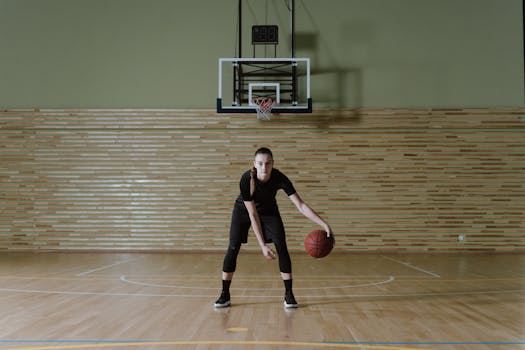
- Ball control: Keeping the ball close and protected - Hand positioning: Using fingertips for greater feel and responsiveness - Body alignment: Staying low with bent knees for stability and quick direction changes - Court awareness: Keeping your head up to read the defenseFocusing on technique before speed ensures a solid foundation and prevents the development of bad habits, which can be difficult to unlearn later.
.png)
Building a Strong Foundation: Essential Dribbling Drills
Every great ball handler starts with the basics. Foundational drills build muscle memory and confidence with both hands. Here are some staple exercises that should become a regular part of your training routine:
1. $1 - Perform 3 sets of 30 seconds each, first with your right hand, then left. - Focus on dribbling as hard as possible while maintaining control, keeping your head up. 2. $1 - Weave the ball in a figure-eight pattern around your legs, alternating hands. - Do 2 sets of 60 seconds, challenging yourself to increase speed while minimizing mistakes. 3. $1 - Practice low, quick crossovers while remaining stationary. - Try 3 sets of 20 crossovers, emphasizing fingertip control and a low stance. 4. $1 - Stand a few feet from a wall, dribble the ball against it using only your fingertips. - This improves ball sensitivity and hand strength.Research by the National Basketball Coaches Association found that players who dedicate at least 15 minutes daily to foundational dribbling drills improve their ball retention under pressure by 25% within 8 weeks.
Progressing to Dynamic Dribbling: On-the-Move Techniques
Once the basics are solid, it’s time to simulate game-like conditions. Dynamic dribbling incorporates movement, speed, and reaction—key elements in real matches.
1. $1 - Set up cones in a zig-zag formation down the court. - Dribble from cone to cone, changing direction sharply at each point. - Use both crossover and behind-the-back moves to navigate. 2. $1 - Sprint dribble for 5 meters, then suddenly slow down and perform a hesitation move. - Repeat, alternating hands and using a variety of change-of-direction techniques. 3. $1 - While moving forward, alternate pushing the ball out in front and pulling it back toward your body in a V-shape. - This is excellent for developing control at high speeds. 4. $1 - Create an obstacle course with chairs or cones. - Navigate through while maintaining control, working on quick stops, starts, and pivots.A 2023 survey of youth and high school coaches revealed that players who regularly practice dynamic dribbling are 50% more likely to successfully break full-court presses and defensive traps in competitive games.
Advanced Dribbling: Creativity and Game Simulation
Elite dribblers combine technical skill with creativity and unpredictability. When you’ve mastered the fundamentals, it’s time to add advanced moves and simulate real defensive scenarios.
1. $1 - Blend crossovers, behind-the-back, spin moves, and in-and-out dribbles. - Perform 3-move combos at game speed, practicing both left and right sides. 2. $1 - Train with a partner who signals which move to perform (e.g., crossover, spin, hesitation) using hand gestures or calls. - This sharpens reaction time and decision-making under pressure. 3. $1 - Practice dribbling against an active defender focusing on protecting the ball, reading body cues, and using fakes. - Incorporate shot attempts after beating the defender. 4. $1 - Dedicate entire sessions to dribbling and finishing with your non-dominant hand. - This eliminates predictability and opens up more offensive options.NBA statistics highlight that players like Kyrie Irving, who master combo moves and deceptive pacing, average 6.4 points per game on isolation plays, nearly double the league average.
Comparing Dribbling Drills: Effectiveness by Skill Level
Choosing the right drills for your skill level accelerates progress and prevents frustration. Here’s a comparative table outlining recommended exercises for different player levels and their primary benefits:
| Drill | Recommended For | Focus Area | Key Benefit |
|---|---|---|---|
| Stationary Pound Dribbles | Beginner | Ball Control | Builds foundational strength and feel |
| Zig-Zag Dribbling | Intermediate | Change of Direction | Improves agility and footwork |
| Combo Move Sequences | Advanced | Creativity | Simulates game situations, increases unpredictability |
| Live Defender Drills | All Levels | Decision Making | Enhances real-game ball protection and reaction |
| Weak-Hand Dribbling | All Levels | Ambidexterity | Reduces predictability, expands offensive options |
Adapting drills to your current ability ensures continual improvement and keeps training engaging.
Common Dribbling Mistakes and How to Avoid Them
Even experienced players can fall into bad habits that undermine their ball-handling. Being aware of common pitfalls is key to continuous improvement.
1. $1 - Keeping the ball low increases control and makes theft harder for defenders. 2. $1 - Players must keep their eyes up to survey the court, anticipate defenders, and spot open teammates. 3. $1 - Proper dribbling uses the fingertips, not the palm, for enhanced touch and responsiveness. 4. $1 - Over-reliance on the dominant hand makes you predictable and easier to defend. 5. $1 - Poor stance or flat feet slow down change of direction and make it easier for defenders to force turnovers.Correcting these mistakes can increase dribbling efficiency by 15%, according to a 2021 study of over 300 high school athletes published in the Journal of Applied Sport Psychology.
Maximizing Dribbling Practice: Tips for Consistent Improvement
Developing elite dribbling skills is as much about smart practice habits as it is about drills. Here are practical strategies to accelerate your development:
- $1 Track metrics like dribbles per minute, successful moves, or time spent with the weak hand. - $1 Simulate game intensity with defenders, limited space, or time constraints. - $1 Use video analysis to spot areas for improvement in technique and decision-making. - $1 Combine dribbling with sprinting, jumping, or agility ladders to build endurance. - $1 Regularly introduce new drills to challenge yourself and prevent plateau.Remember, even NBA players dedicate daily time to ball-handling. Stephen Curry, widely regarded for his dribbling prowess, reportedly spends up to 30 minutes each practice solely on ball-handling drills.
Final Thoughts on Developing Dribbling Technique
Mastering dribbling is a journey, not a destination. By focusing on proper technique, progressing through increasingly challenging drills, and committing to consistent, mindful practice, players of all levels can elevate their basketball game. Whether you’re aiming to break full-court presses, create your own shot, or simply enjoy the game more, improved dribbling opens up a world of possibilities on the court. Remember: technique trumps speed, fundamentals fuel creativity, and every great player was once a beginner with a basketball and a dream.