Basketball Strategy for Beginners: How to Read the Game and React to Situations
Whether you’re stepping onto the basketball court for the first time or looking to deepen your understanding of the game, developing your ability to “read the game” and react to fast-changing situations is essential. Basketball is more than just physical skill; it’s a mental contest where quick thinking, anticipation, and strategic responses can make all the difference. This article will guide you through the foundational strategies beginners need to recognize patterns, make smart decisions, and adapt their play in real time.
The Importance of Game Awareness in Basketball
In basketball, game awareness—sometimes called “basketball IQ”—refers to a player’s ability to understand what’s happening on the court and anticipate what will happen next. For beginners, developing this sense isn’t automatic; it requires focus, observation, and purposeful practice. According to a 2023 survey by the National Federation of State High School Associations (NFHS), 78% of coaches highlighted basketball IQ as “very important” for young player development, second only to fundamental skills like dribbling and shooting.
Game awareness helps players: - Predict opponent moves and react faster - Position themselves effectively on offense and defense - Make smarter passes and shot selections - Communicate and collaborate with teammatesUnlike physical skills that rely on practice alone, reading the game involves watching patterns, learning from experience, and staying mentally engaged during every play. Even NBA legends like Chris Paul and Sue Bird have cited game IQ as a key factor in their longevity and success.
.png)
Key Elements of Reading the Game
Reading the game in basketball means processing multiple elements at once. Beginners should focus on these core aspects:
1. $1 Notice how teammates and opponents move without the ball. Are players cutting toward the basket or spreading out to the corners? Good spacing creates open shots and passing lanes.Example: In a standard 5-on-5 half-court set, spacing often forms a “three-out, two-in” pattern—three players around the perimeter and two near the paint. Spotting this helps players anticipate where to move or pass next.
2. $1 Recognize whether the opposing team is playing man-to-man or zone defense. In man-to-man, every defender is responsible for a specific player. In zone, defenders cover areas of the court. Reading the defense helps you exploit weaknesses—like attacking a slow defender in man-to-man or finding gaps in a 2-3 zone. 3. $1 Teams often run structured plays to create scoring opportunities. Beginners should learn to identify common actions like pick-and-rolls, backdoor cuts, and off-ball screens. Recognizing these helps you anticipate where the ball will go. 4. $1 Always be aware of how much time is left. The NBA shot clock is 24 seconds, while high school and college may use 30 or 35 seconds. Knowing the clock situation helps you decide when to speed up or slow down.Reacting to Situational Changes During a Game
Basketball is a game of constant motion and quick decisions. Here are some scenarios and how beginners should react:
- $1 If your team quickly gains possession (off a rebound or steal), look upcourt immediately. Sprinting to fill lanes creates easy scoring chances before the defense sets up. Stat: According to Synergy Sports, fast breaks account for about 14% of NBA scoring, but average a higher points-per-possession rate (1.12) than half-court plays. - $1 When defenders double-team the ball handler, react by moving to open space and making yourself available for a pass. On defense, if you see a teammate trapped, rotate quickly to cover potential passes. - $1 With the game on the line, coaches may call specific plays. Players must quickly recognize and execute these instructions—whether it’s a defensive switch, intentional foul, or last-second shot. Awareness of the score and remaining time is critical. - $1 If a key player has multiple fouls, your team’s strategy might change—playing less aggressively on defense or substituting bench players to avoid disqualification.Comparing Offensive and Defensive Reactions
Let’s compare how beginners should react to common game situations, depending on whether they are on offense or defense.
| Situation | Offensive Reaction | Defensive Reaction |
|---|---|---|
| Opponent full-court press | Spread out, use quick passes, avoid dribbling into traps | Trap ball handler, cut off passing lanes, anticipate long passes |
| Zone defense | Move the ball quickly, find soft spots in the zone, use skip passes | Shift as a unit, communicate, close out on shooters |
| Fast break opportunity | Sprint to fill lanes, attack the basket, look for open teammates | Protect the paint, stop the ball, communicate assignments |
| End-of-quarter possession | Set up a high-percentage shot, manage the clock | Deny easy shots, avoid fouls, force a difficult shot |
Understanding these different reactions helps players prepare for what to do in the heat of the moment.
The Role of Communication and Teamwork in In-Game Adjustments
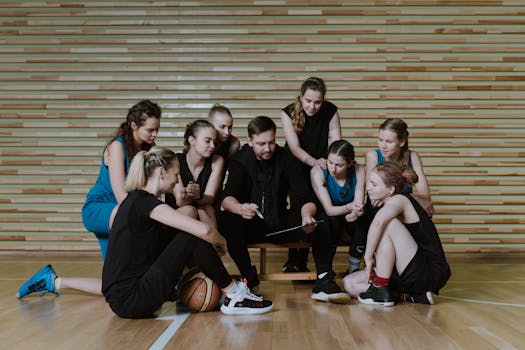
No player wins alone. In basketball, communication is the glue that holds strategy together. For beginners, learning when and how to talk on the court is vital. According to FIBA, teams that actively communicate average 20% fewer defensive breakdowns per game.
Key communication strategies include: - Calling out screens (“Screen left!”) - Informing teammates of switches on defense - Signaling for the ball when open - Reminding each other about shot clock or game clockGreat teams also develop hand signals and verbal cues for quick play changes. For example, a point guard might tap their head to signal a particular offensive set. Responsive communication leads to better team cohesion, faster reactions, and fewer mistakes.
Developing Your Basketball IQ Through Practice and Observation
Building your in-game awareness and reaction skills doesn’t happen overnight. Here are proven methods for beginners:
1. $1 Game-like practice is the best teacher. Simulate real situations, such as fast breaks or zone defenses, to get comfortable reading and reacting. 2. $1 Don’t just watch for entertainment—observe how pros position themselves, communicate, and react. Slow-motion replays can reveal subtle strategic moves. 3. $1 Don’t be afraid to ask questions during practice. “Why did you make that pass?” or “How did you know to cut there?” Learning from others accelerates your understanding. 4. $1 Even at the youth and amateur levels, recording games and reviewing key moments can highlight patterns and areas for improvement. Stat: According to the Positive Coaching Alliance, teams that review film show a 15% improvement in situational decision-making. 5. $1 Mental rehearsal is a proven technique. Picture yourself in common situations (like defending a pick-and-roll or breaking a trap) and imagine your responses.Final Thoughts: Elevating Your Game with Smart Reactions
Basketball is a fast-paced, ever-evolving sport where players must blend physical skill with mental sharpness. For beginners, learning to read the game and react appropriately is the bridge between simply playing and truly competing. By focusing on awareness, communication, and practice, you’ll gain the confidence to make quick decisions, support your teammates, and adjust to any situation on the court. Remember, the most impactful players aren’t always the tallest or fastest—they’re the ones who see the game one step ahead.