Basketball Defense Techniques: How to Become a Better Defender
Few aspects of basketball are as thrilling and game-changing as a lockdown defender shutting down a top scorer. While highlight reels may focus on dunks and deep threes, defense is often what wins championships. Learning basketball defense techniques is essential for players at every level. If you want to transform into a better defender, it takes more than hustle—it takes strategy, skill, and consistent practice. This article dives deep into the art of basketball defense, offering practical tips, scientific insights, and advanced strategies to help you become a defensive asset for any team.
The Importance of Defense in Basketball Success
Defense is far from an afterthought in basketball. According to NBA statistics, teams ranked in the top 5 for defensive efficiency have made the playoffs over 90% of the time in the past decade. Defensive skills don’t just stop points—they create fast-break opportunities, force turnovers, and can shift the entire momentum of a game.
A good defender can change the outcome of a play, a quarter, or even a season. For example, the 2004 Detroit Pistons, often cited as one of the most defensively dominant teams, held opponents to just 84.3 points per game—a full 7 points less than the league average that year. Their championship run was powered by defense, not just offense.
.png)
Becoming a better defender isn’t only about effort; it’s about understanding the techniques, anticipation, and teamwork that great defense requires.
Fundamental Defensive Stance and Movement
Great defense starts before your opponent even touches the ball. The foundation of all defensive play is the stance and movement.
A proper defensive stance involves:
- Feet shoulder-width apart for balance - Knees bent, hips low to the ground - Weight on the balls of your feet, ready to move in any direction - Hands active—one outstretched to contest shots or passes, the other low to swipe at dribblesThis stance allows quick lateral (side-to-side) movement, crucial for staying in front of an attacker. Research from the Journal of Sports Science & Medicine found that players with superior lateral quickness reduced their opponent’s field goal percentage by 8% on average.
Drills to Improve Defensive Movement:
- Slide drills: Move quickly from side to side along the baseline, focusing on staying low and balanced. - Mirror drills: Partner up; one player leads, the other mirrors their movements, staying in a defensive stance. - Closeout drills: Sprint from under the basket to the three-point line, closing out with high hands to challenge a shooter.Proper movement minimizes fouls and puts you in a position to contest every shot.
On-Ball vs. Off-Ball Defense: Key Differences
Defense in basketball is not a one-size-fits-all concept. There are two main defensive responsibilities: on-ball and off-ball defense.
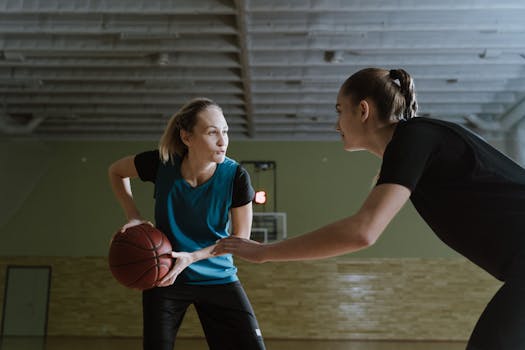
On-ball Defense: - Involves guarding the player currently in possession of the ball - Requires quick reactions, anticipation, and the ability to contest shots without fouling - Key techniques include “shading” (forcing the ball handler toward their weak hand), maintaining hand pressure, and using quick footwork to cut off driving lanes Off-ball Defense: - Involves guarding players without the ball, often through screens and cuts - Requires awareness of both your man and the ball (often referred to as “seeing man and ball”) - Key techniques include staying in a “help position,” fighting through screens, and rotating to provide help defenseThe table below compares the core skills and responsibilities:
| Aspect | On-Ball Defense | Off-Ball Defense |
|---|---|---|
| Main Focus | Ball handler | Player without ball |
| Key Skill | Containment, quick footwork | Awareness, anticipation |
| Common Mistake | Overcommitting, reaching in | Losing sight of man or ball |
| Example Drill | 1-on-1 isolation defense | Deny-the-pass & help-side rotation |
A complete defender excels at both, switching seamlessly as the play develops.
Mastering Team Defensive Strategies
Individual defense is crucial, but basketball is ultimately a team sport. Effective defenders must understand how to work within team defensive schemes.
Popular Team Defensive Strategies:
1. Man-to-Man Defense: - Each defender is responsible for one offensive player - Requires strong on-ball and off-ball skills - Most common at advanced levels, as it promotes accountability 2. Zone Defense: - Defenders guard designated areas (“zones”) instead of specific players - Effective at disrupting teams with poor outside shooting - The 2-3 zone is popular in high school and college levels 3. Switch Defense: - Defenders switch assignments on screens to prevent easy mismatches - Demands strong communication and versatility 4. Help and Recover: - When a defender is beaten, a teammate steps in (“help”), then quickly returns (“recovers”) to their own man - Essential in modern basketball, where pick-and-roll plays are frequentStatistics show that the Golden State Warriors, who led the NBA in defensive rating in 2015 and 2017, excelled at help defense and switching, limiting opponents to just 99.1 points per 100 possessions.
Communication is Key: - Call out screens (“Screen left!”) - Alert teammates when you’re switching or providing help - Use hand signals for silent communicationA well-coordinated team defense can frustrate even the most potent offenses.
Anticipation, Reading Offense, and Forcing Turnovers
Great defenders are not just reactive—they’re proactive. Anticipation separates average defenders from elite ones.
How to Anticipate Effectively:
- Study Opponents: Learn your matchup’s favorite moves, tendencies, and shooting spots. For example, if you know a right-handed player prefers driving right, shade them to their left. - Read the Eyes: Ball handlers often telegraph their intentions. Watch their eyes and body language to predict passes or drives. - React, Don’t Reach: Positioning is more important than “stealing” the ball. Overreaching leads to fouls. Forcing Turnovers: - In the 2022-23 NBA season, teams that averaged 15+ forced turnovers per game won 65% of their games. - Use quick hands to swipe at the ball, especially when the opponent is changing direction or exposing the ball - Jump passing lanes when you anticipate a cross-court passDrill Example: “Deflection Drill” – Players practice deflecting passes without committing fouls, focusing on hand placement and timing.
Anticipation is partly instinct, but mostly preparation and focus.
Defending Without Fouling: Discipline and Mentality
A common pitfall for aggressive defenders is foul trouble. The best defenders combine intensity with discipline, understanding when to challenge and when to contain.
Tips to Defend Without Fouling:
- Use your body, not your hands. Move your feet to stay in front, using your chest to absorb contact. - Challenge shots with verticality—jump straight up, not into the shooter - Avoid reaching in; instead, time your swipes when the ball is exposed - Keep your hands up and active, but not slapping downMental toughness is essential. The best defenders don’t get discouraged after being beaten once. They reset quickly, stay focused, and continue to play hard without letting frustration lead to fouls.
A 2019 NCAA study found that teams with fewer than 15 fouls per game had a 72% win rate, underscoring the link between disciplined defense and success.
Building Defensive Skills: Drills and Practice Routines
Improvement on defense is built through repetition and targeted practice. Here are some proven drills for developing defensive prowess:
1. Shell Drill: A 4-on-4 half-court drill focusing on off-ball positioning, rotations, and help defense. 2. Zig-Zag Drill: Players slide laterally in a zig-zag pattern up the court, maintaining stance and balance. 3. Closeout and Contest: Players sprint to a spot, close out with high hands, and contest an imaginary shot. 4. Two-Ball Disruption: Defenders try to steal or deflect two balls being passed between three offensive players.Incorporate these drills into your practice routine three times a week. Focus on technique and intensity—quality matters more than quantity.
Becoming a Lockdown Defender: Real-World Examples
Some of the greatest defenders in basketball history built their reputations on relentless effort and technical mastery.
- Gary Payton, nicknamed “The Glove,” was a 9-time NBA All-Defensive First Team selection and known for his trash talk as much as his ability to shut down top guards. - Kawhi Leonard, a two-time Defensive Player of the Year, has massive hands and an uncanny ability to anticipate and intercept passes. - Tamika Catchings, WNBA legend, led the league in steals five times and is the only player in league history with at least 1,000 career steals, blocks, and assists.What these players share is a commitment to the fundamentals, a high basketball IQ, and a relentless mentality.
Final Thoughts: Elevate Your Defensive Game
Becoming a better basketball defender is a journey, not a destination. Great defense is a blend of physical skill, mental preparation, and teamwork. Whether you’re just joining a youth league or striving for college or pro levels, focusing on defense can set you apart.
Remember: - Master the fundamentals: stance, footwork, and movement - Study both on-ball and off-ball responsibilities - Communicate and work within your team’s defensive system - Anticipate and react, not just chase the ball - Stay disciplined, aggressive, and resilientCommit to improving your defensive skills, and you’ll not only boost your own game—you’ll become a player every coach wants on their team.