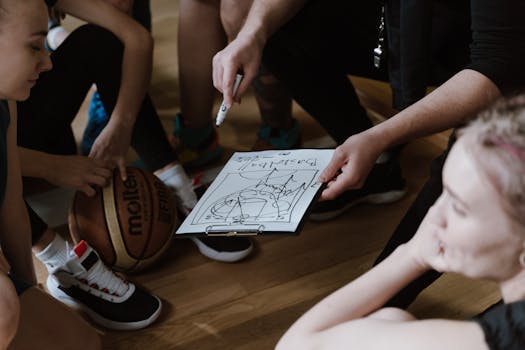
Basketball Tactics: Basic Game Systems and Strategies for Winning Play
Basketball is more than just skillful dribbling and powerful slam dunks; at its core, the game is a chess match of tactics and strategies. The best teams blend individual brilliance with carefully orchestrated systems, creating a rhythm that’s both beautiful and effective. Whether you’re a player, coach, or an enthusiastic fan, understanding basketball tactics and the foundational game systems is key to appreciating how teams win games. This guide dives deep into the essential strategies that shape basketball at every level, from youth leagues to the NBA, explaining both offensive and defensive systems, and how they interact on the court.
The Importance of Basketball Systems and Their Evolution
Basketball’s tactical side has evolved dramatically since Dr. James Naismith first nailed up peach baskets in 1891. Early basketball focused almost entirely on individual effort and simple passing. Today, teams rely on sophisticated systems to maximize efficiency and exploit opponents’ weaknesses.
In modern basketball, game systems refer to the structured patterns—offensive and defensive—that guide how players move, interact, and make decisions. These systems include set plays, defensive coverages, and transition tactics, all built to create advantages. For example, in the NBA’s 2022-2023 season, teams executed on average 85 offensive possessions per game, with nearly 40% of scoring coming directly from set plays.
.png)
The rise of analytics and video analysis has further refined tactics. Coaches like Gregg Popovich and Erik Spoelstra are known for their ability to adapt systems mid-game, while teams such as the Golden State Warriors have become famous for their motion offense and defensive switches. Understanding how these systems work, and why they matter, is essential for grasping the full depth of the sport.
Core Offensive Game Systems: Creating Space and Opportunity
Offensive systems are the blueprints for how a team attempts to score. These schemes structure player movement, passing lanes, and shot selection. Let’s explore the most influential offensive systems:
1. $1 The motion offense emphasizes constant movement, passing, and spacing. Rather than relying on set plays, players react to the defense and each other, creating opportunities through screens and cuts. This system, popularized by coaches like Bob Knight and later adapted by Steve Kerr with the Golden State Warriors, requires high basketball IQ and teamwork. 2. $1 A staple of modern basketball, the pick-and-roll involves a ball handler and a screener working together to force defensive mismatches. In the 2022-2023 NBA season, pick-and-roll plays accounted for 18.1% of all offensive possessions, according to Synergy Sports. The system is favored for its simplicity and effectiveness, especially when run by dynamic duos like Chris Paul and Deandre Ayton. 3. $1 Phil Jackson’s Chicago Bulls and Los Angeles Lakers won a combined 11 NBA championships using the triangle offense. This system positions three players in a triangle on one side of the court, creating spacing and multiple options for passing and cutting. While complex, the triangle allows for flexible decision-making and constant movement. 4. $1 Some teams prioritize speed, pushing the ball upcourt after rebounds or turnovers. Transition offense uses quick passes and athleticism to score before the defense sets. In 2023, the NBA’s Sacramento Kings led the league with an average of 1.21 points per transition possession.Defensive Strategies: Stopping the Opponent
While offense may fill the highlight reels, defense wins championships. Effective defensive systems disrupt the opponent’s rhythm, force turnovers, and limit high-percentage shots. Here are the fundamental defensive strategies:
1. $1 Each defender is assigned to guard a specific opponent. This system is prized for its adaptability and accountability. In 2022, 75% of NBA defensive possessions were played in man-to-man coverage, according to NBA Advanced Stats. Teams like the Miami Heat excel at switching assignments to counter screens and prevent mismatches. 2. $1 In zone defense, players guard areas of the court rather than specific opponents. The 2-3 zone, where two players guard the perimeter and three protect the paint, is common at the college level. Syracuse University’s men’s team, for example, has famously used the 2-3 zone to reach five Final Fours since 1987. 3. $1 This aggressive system applies pressure to the ball handler across the entire court, aiming to force turnovers and disrupt the opponent’s offensive flow. Full-court presses are often used in late-game situations or by teams with deep benches. 4. $1 Modern defenses often utilize switching (exchanging defensive assignments on screens) and help defense (rotating to support teammates beaten by their man). The Toronto Raptors’ 2019 championship run was powered by versatile defenders who could switch and help seamlessly.Comparing Common Offensive and Defensive Systems
To better understand the strengths and weaknesses of various basketball systems, here’s a comparison table summarizing key characteristics:
| System | Type | Main Strength | Main Weakness | Typical Usage |
|---|---|---|---|---|
| Motion Offense | Offense | Unpredictability, teamwork | Requires high basketball IQ | NBA, NCAA |
| Pick-and-Roll | Offense | Creates mismatches | Can be defended with switching | NBA, FIBA |
| Triangle Offense | Offense | Spacing, multiple options | Complex, needs time to master | Historic NBA |
| Man-to-Man Defense | Defense | Adaptable, direct pressure | Susceptible to off-ball screens | All levels |
| Zone Defense | Defense | Protects paint, saves energy | Vulnerable to outside shooting | NCAA, FIBA |
| Full-Court Press | Defense | Forces turnovers, fast pace | Fatiguing, risky if broken | Youth, NCAA |
Adapting Strategies: How Teams Adjust During Games
A defining feature of advanced basketball is the ability to adapt tactics mid-game. Coaches constantly read the flow of play, making adjustments to exploit weaknesses or counter the opposition. For instance, if a team struggles to defend pick-and-rolls, coaches might switch to a zone defense to clog the paint. Conversely, if an opponent is hot from three-point range, a team may switch to man-to-man to apply more perimeter pressure.
The NBA playoffs are a masterclass in strategic adaptation. During the 2023 playoffs, the Denver Nuggets adjusted their defensive coverages on Miami Heat star Jimmy Butler, using double teams in the second half of games. This led to a 17% drop in Butler’s second-half shooting percentage, highlighting the impact of tactical shifts.
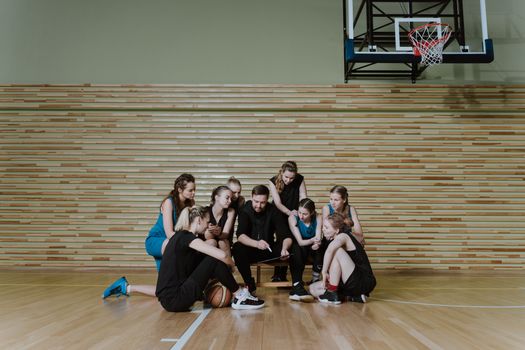
Timeouts and halftime are crucial for these adjustments. Coaches use video reviews and analytics to pinpoint issues and communicate changes. At the youth and collegiate levels, flexibility and understanding of multiple systems are key traits for successful teams.
Role of Players and Communication in Executing Tactics
No tactic succeeds without disciplined execution from players. Communication is vital—on offense, players call out screens and cuts, while defenders alert each other to switches and rotations. The San Antonio Spurs, winners of five NBA titles since 1999, are renowned for their “team-first” culture and constant on-court chatter.
Specific roles also emerge within systems. For example, in the pick-and-roll, the “roller” must read the defense and decide whether to cut to the basket or pop out for a jump shot. In zone defenses, players must shift quickly to cover open shooters while protecting the paint.
Leadership on the floor makes a huge difference. According to a 2021 NCAA survey, teams with designated defensive captains allowed 6.2 fewer points per game than teams without clear vocal leaders. Practice, film study, and repetition build the trust and chemistry needed for seamless execution.
Why Understanding Basketball Tactics Elevates Your Game
Whether you’re a casual fan or an aspiring coach, understanding basketball’s basic game systems and strategies transforms the way you watch and play the sport. It’s not just about scoring points or blocking shots—it’s about outthinking your opponent, making smart adjustments, and executing as a unit. The most successful players and teams are those that master both the mental and physical aspects of the game.
From the fast-paced chaos of the fast break to the cerebral battle of a half-court set, every moment on the basketball court is shaped by tactical choices. As analytics and technology continue to influence the sport, expect even greater innovation in the years ahead. By grasping these fundamentals, you’re better equipped to appreciate the artistry and intellect that make basketball the world’s most popular indoor sport.