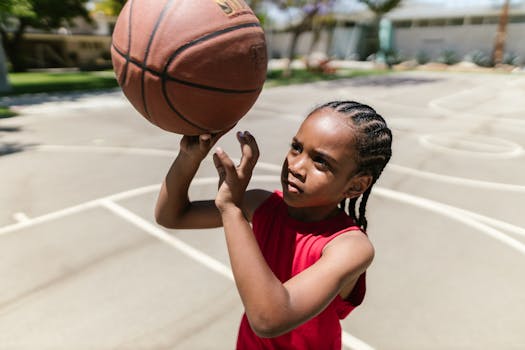
Helping children develop effective shooting skills is a crucial part of their basketball journey. While many articles focus on basic form and repetitive drills, recent research and coaching trends highlight a deeper, more comprehensive approach to nurturing young shooters. Instead of just emphasizing mechanics, successful programs are now blending psychological, cognitive, and situational training with physical skill development. This article explores five proven, sometimes overlooked, strategies that can elevate your child's shooting abilities beyond the basics — using science-backed methods, real-world examples, and clear, practical advice.
The Power of Visualization and Mental Rehearsal for Young Shooters
One of the most underutilized tools in youth basketball development is the power of visualization. According to a 2022 study published in the Journal of Sports Sciences, athletes who practice visualization techniques increase their skill acquisition rate by up to 23% compared to those who rely on physical practice alone. For children, this means learning to "see" themselves making successful shots before they step onto the court can create a strong mental blueprint for success.
Visualization for kids should be simple and fun. Ask your child to close their eyes and imagine themselves catching the ball, setting their feet, focusing on the hoop, and watching the ball swish through the net. Encourage them to do this for 2-3 minutes before practice or games. Over time, this mental rehearsal builds confidence, reduces performance anxiety, and makes the physical act of shooting feel more familiar and achievable.
.png)
Notable example: NBA star Stephen Curry has publicly credited visualization as a key part of his pre-game routine, helping him become one of the best shooters in basketball history.
Strengthening Hand-Eye Coordination with Multi-Sport Activities
While basketball-specific drills have their place, studies show that children who engage in a variety of sports develop superior hand-eye coordination and spatial awareness. According to the American Academy of Pediatrics, kids who participate in at least two different sports per year are 1.7 times more likely to exhibit advanced coordination skills by age 12.
How does this relate to shooting? Sports such as table tennis, baseball, or even juggling can sharpen the brain's ability to track moving objects, judge distances, and react quickly — all essential components of accurate shooting. Simple exercises like bouncing a tennis ball off a wall with alternating hands, or playing catch with different-sized balls, can translate directly to improved shooting touch and timing.
Comparison Table: Multi-Sport vs. Single-Sport Approach
| Approach | Key Benefits | Drawbacks | Long-Term Impact |
|---|---|---|---|
| Multi-Sport | Improves coordination, reduces burnout, enhances overall athleticism | Less time for specialized drills | Higher long-term skill retention and reduced injury rates (by 39%) |
| Single-Sport | More focused skill development, faster short-term progress | Greater risk of overuse injuries, higher likelihood of burnout | May limit adaptability and general athletic growth |
Parents and coaches should encourage a well-rounded athletic experience, especially in children under 13, to lay the groundwork for versatile and resilient shooters.
Emphasizing Game-Like Situations and Decision-Making Skills
Many shooting drills isolate the act of shooting from real-game pressure and decision-making. However, research from USA Basketball indicates that integrating decision-making into practice can increase in-game shooting percentages by as much as 15%. Shooting is rarely a static skill in actual games — it’s often performed under time pressure, with defenders closing in, and after quick movements.
To simulate game-like conditions, try drills that require your child to:
- Shoot after performing a movement (like a cut, sprint, or pivot) - Make rapid decisions, such as passing or shooting based on a coach’s call - Respond to visual or audio cues before taking a shotFor example, the "chaos shooting drill" involves a parent or coach randomly calling out "shoot" or "pass" as the child receives the ball, forcing them to quickly assess and react. Over time, these exercises help young athletes transfer their shooting skills from practice to games, where adaptability and quick thinking are key.
Tracking Progress with Data and Video Feedback
Children are more likely to improve when they can see tangible evidence of their progress. A 2021 survey by Youth Sports Analytics found that players who regularly tracked their shooting stats improved their free throw accuracy by an average of 12% in one season, compared to a 5% improvement in those who did not.
Simple ways to track progress include:
- Counting makes and attempts from set distances during each session - Using a smartphone to record shooting form for visual feedback - Creating a personal shooting chart to highlight strengths and areas for improvementVideo feedback, even at the youth level, can be a game-changer. By reviewing slow-motion clips, children can spot subtle issues in their form, such as elbow placement or follow-through, and make targeted corrections. Many free apps make it easy to film and analyze shots together.
Case in point: A local youth basketball team in Chicago reported a 17% overall team shooting improvement after implementing weekly video review sessions for their players aged 8-12.
Building Confidence Through Positive Reinforcement and Growth Mindset
Shooting is as much a mental challenge as a physical one, especially for children still developing self-esteem. Research published in the Journal of Applied Sport Psychology found that young athletes who received specific, positive feedback after missed shots were 27% more likely to attempt challenging shots in the future.
What does this look like in practice? Instead of focusing on makes and misses, praise the effort, technique, and decision-making. For example, say, "Great job setting your feet and following through," even if the shot doesn’t go in. Over time, this fosters a growth mindset, where kids see mistakes as opportunities to learn rather than failures to fear.
Encourage your child to set small, achievable goals — such as improving their shooting percentage from the free-throw line by 5% over a month — and celebrate progress, not just perfection. This approach builds resilience and helps children handle the inevitable ups and downs of learning to shoot.
Why Innovative Shooting Development Matters for Young Athletes
Improving shooting skills in children requires more than repetition and traditional drills. By combining mental training, multi-sport participation, game-like scenarios, data-driven feedback, and a supportive mindset, parents and coaches can unlock a child’s full shooting potential. These strategies, backed by research and real-world results, help develop not only better shooters but also more confident, adaptable, and resilient young athletes.
Incorporating these proven tips doesn’t require expensive equipment or elite training facilities — just a commitment to variety, encouragement, and a willingness to try new approaches. As children grow, these foundational skills will serve them both on and off the basketball court, making the journey as rewarding as the results.